Five phases, and the three things that make them fast
Discovery, design, build, validation, rollout. The three conditions that decide whether a build lands at the fast end of the range.


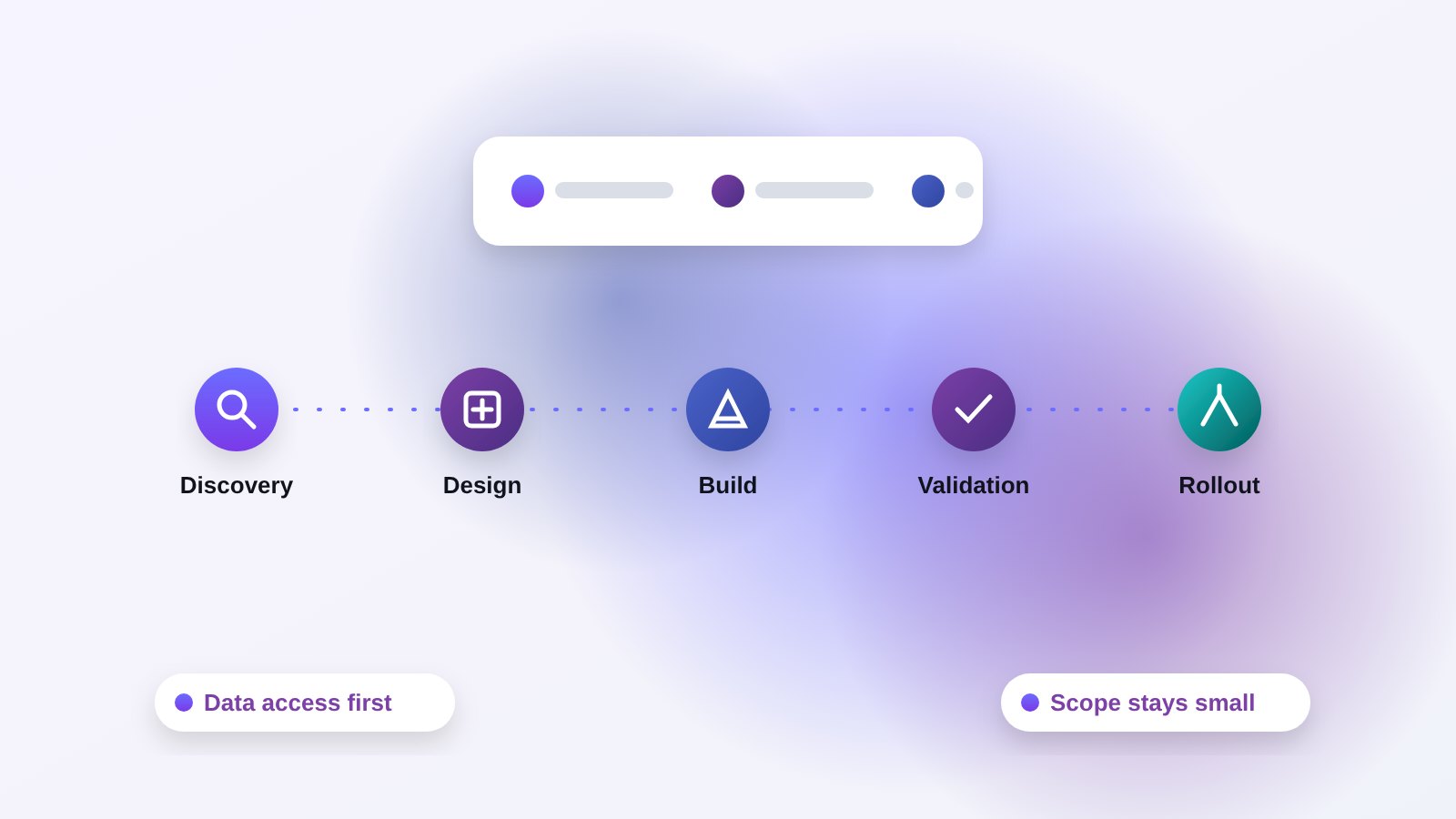
Every build we do follows the same five phases: discovery, design, build, validation and rollout. The phases are not new. What matters is what happens inside them, and the three things that decide whether a build lands at the fast end of its range or the slow end.
The five phases
Discovery is one to two weeks. We learn what you run today, what you want from it and what the data can support. Design fixes the data model, the KPIs (key performance indicators), the output surface and the governance rules before any build starts. Build is the shortest phase when design was done well. Validation is where a named decision-maker checks every output against the numbers. Rollout hands over a system with monitoring, support SLAs (service level agreements) and a quality-review process already in place.
The ranges are known. Custom views and unified reports take two to four weeks. Reporting automation takes one to three weeks. An AI (artificial intelligence) insight layer MVP (minimum viable product) on one BI (business intelligence) environment takes four to eight weeks. Assistant or workflow deployments take four to six weeks. A custom application's first release is scoped after discovery. Firm timelines are confirmed after discovery.
The first thing: data access
The single largest cause of delay is data that cannot be reached. Clean, governed sources with access granted on day one put a build at the fast end of the range. Access that arrives in week three, or data that needs cleaning before it can be read, moves everything after it. If there is one thing to prepare before discovery, it is this.
The second thing: a named decision-maker
Validation cycles need one person who can say yes. Not a committee. One person who looks at an output, checks it against the numbers and approves it or sends it back. When that person exists, a validation cycle takes a day. When it does not, it takes a fortnight of meetings.
The third thing: scope discipline
One platform. One core data model. Three to five high-value use cases first. Then phase two. Every item added to the first release adds integration work, validation work and risk. The teams that ship fastest are the ones that keep the first release small and let the evidence from it set the order of everything that follows.
What this looks like from your side
Before discovery, grant access to the sources and name the decision-maker. In discovery, agree the three to five use cases and resist the sixth. In validation, give the decision-maker the time to review each cycle promptly. Do those three things and the build lands at the fast end of its range.